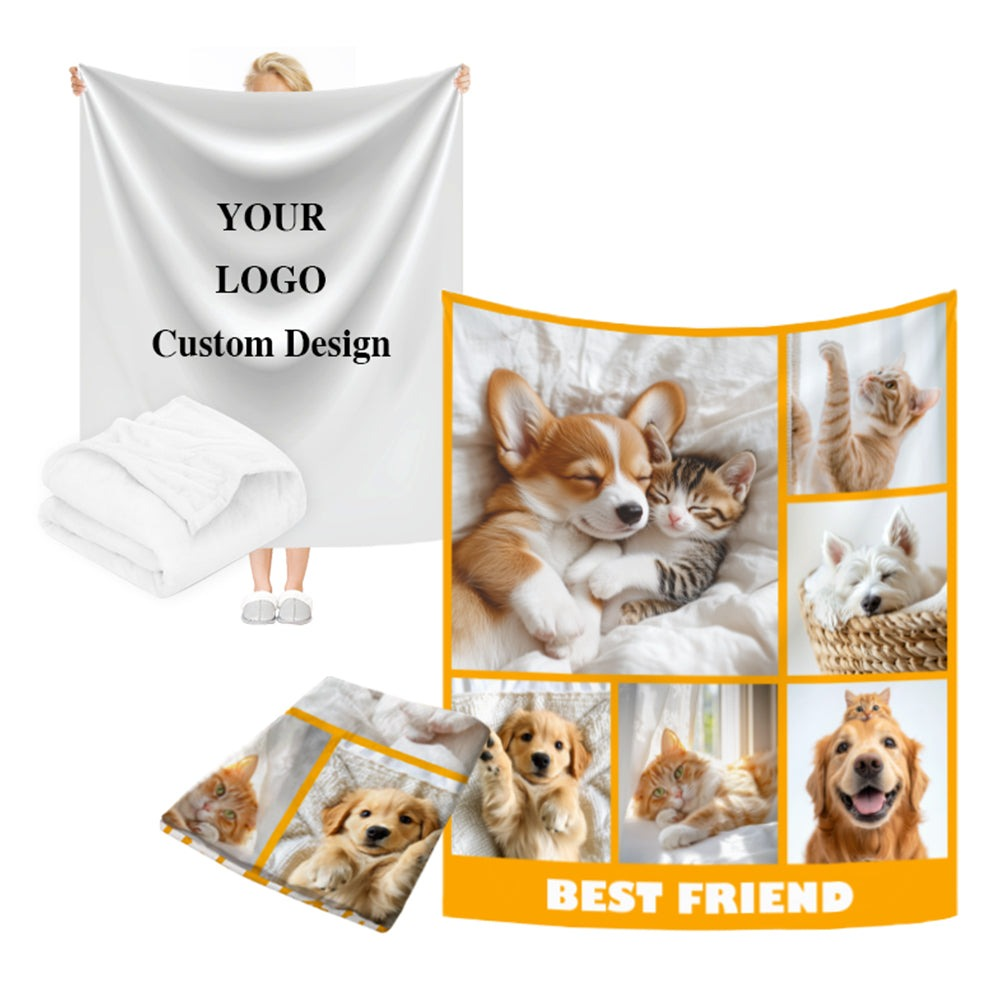
Buying blankets in bulk can reduce the per-unit cost, but a low price alone does not guarantee a profitable purchase. Brand owners need to balance quantity, materials, design, quality, shipping, and inventory requirements. When sourcing custom blankets bulk, the goal should be to achieve a competitive unit cost without sacrificing the product qualities that customers notice. A structured purchasing process makes it easier to control costs while protecting the value of the finished product.
Define Your Blanket’s Purpose First
Before requesting a bulk quotation, determine exactly how the blankets will be used. A retail blanket, promotional giveaway, hotel amenity, event product, and branded gift may require very different specifications.
Start by deciding the target customer, intended environment, preferred size, material expectations, and design style. This reduces the risk that unnecessary features raise production costs and makes supplier quotations easier to compare.
A clearly defined product can also help reduce the risk of ordering excessive inventory simply because a larger quantity appears cheaper per unit.
Use Quantity Strategically to Lower Unit Cost
Bulk purchasing can improve unit economics because manufacturers may spread setup and production costs across more units. However, the largest possible order is not always the most economical choice for a growing brand.
Consider your realistic sales forecast and storage capacity before committing to a large production run. Compare several quantity levels and calculate the total landed cost rather than looking at the quoted factory price in isolation.
The supplier currently promotes low-MOQ textile production, with overall MOQs ranging from 50 to 1,000+ units depending on the product and customization requirements. Its homepage lists a personalised throw blanket from $2.50 per unit, with a listed minimum of 100 units.
Choose Specifications That Match Your Budget
Material and construction can have a major effect on the final price. Brand owners should decide which product characteristics are essential and which are optional before finalizing a specification.
For example, consider whether the blanket needs a particular fabric weight, special finishing, custom dimensions, or decorative details. Removing features that do not contribute meaningful customer value can help reduce cost without making the product look inexpensive.
At the same time, excessive price pressure also compromises product quality. In the case of blankets in bulk for cheap, a product that feels poor or performs badly may lead to higher returns, complaints, and weaker customer perception.
Keep Customization Focused
Customization can make a blanket more distinctive, but more design elements do not automatically create more value. Focus on the elements that reinforce the brand or product concept.
A logo, signature pattern, recognizable color palette, or carefully selected artwork may be enough to create a strong identity. Excessive printing or unnecessary packaging can increase cost while making the product less appealing.
For businesses developing custom blankets bulk, it is also useful to confirm the available customization options before preparing final artwork. The blanket product pages state that brands can customize details such as fabric colors, sizes, logo printing, and packaging.
Check Samples Before Placing a Large Order
A sample provides an opportunity to evaluate the actual product instead of relying on digital images or descriptions. For blankets, inspect the fabric feel, print appearance, dimensions, stitching, edges, and overall construction.
The sample should also be compared with the approved design. Small differences in color, scale, or placement can become more noticeable when the product is produced in quantity.
This step can seem like an additional expense, but it can be much less costly than discovering a specification problem after a large shipment has already been produced.
Calculate the Real Cost of Bulk Blankets
The quoted unit price is one part of the purchasing equation. Brand owners should also account for sampling, customization, packaging, freight, duties where applicable, storage, and potential handling costs.
A low product price can lose its advantage when transportation or inventory expenses are high. Compare suppliers using the expected landed cost per unit, not simply the initial quotation.
Lead time should be included in the calculation as well. The current site indicates an estimated 3–4 week delivery period for its low-MOQ featured products, although actual timing depends on the product and order requirements.
Build a Repeatable Sourcing Process
Successful bulk purchasing should become a process rather than a one-time price search. Keep records of the approved material, dimensions, artwork, packaging, quantity, quoted cost, and delivery expectations.
When a product performs well, these records make reordering easier and reduce the risk of specification changes. They can also help a brand compare future quotations on a consistent basis.
For growing businesses, consistency is especially important. A cheaper supplier is not necessarily the better choice when inconsistent quality creates additional inspection, customer-service, or replacement costs.
Make “Cheap” Mean Better Value
The best approach is not to pursue the lowest possible quotation. Instead, identify the lowest sustainable cost for the quality, design, and quantity your market actually needs.
For brand owners, a sensible strategy is to define the product clearly, select useful custom features, compare realistic order volumes, approve a sample, and calculate total landed cost before committing.
At Bulijojo, custom textile production pairs with low-MOQ options, and the blanket category sits alongside towels, tote bags, tea towels, and Swedish dishcloths.
A disciplined sourcing process can therefore turn custom blankets bulk purchasing into a controlled part of product development rather than a race to find the cheapest unit price.
