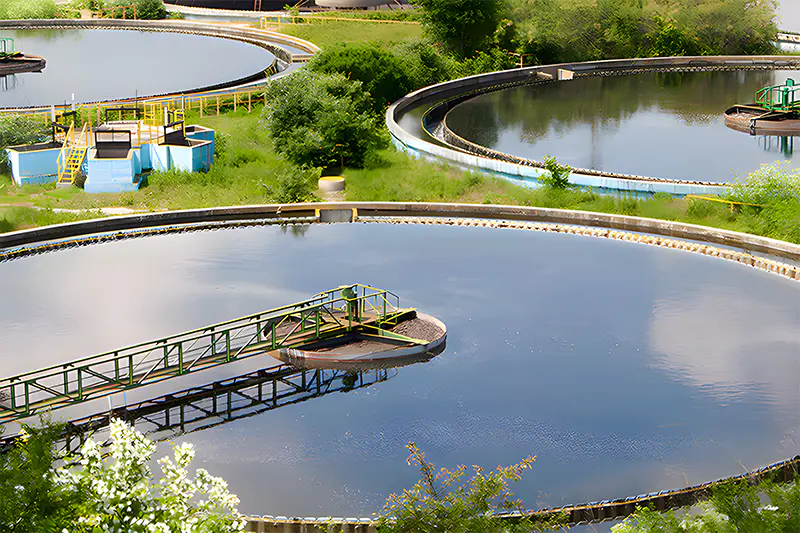
Wastewater reuse has become an increasingly practical approach to managing limited water resources. Instead of treating wastewater only as a discharge stream, municipalities and industrial facilities can apply suitable treatment processes to recover water for defined uses. The right approach depends on water quality, reuse targets, treatment capacity, and operating requirements.
What Does Wastewater Reuse Involve?
Wastewater reuse refers to treating used water so that it can be returned to a useful application rather than being discharged after a single use. The required treatment level varies according to the source of the wastewater and the intended destination of the recovered water. Municipal projects may focus on improving water availability for non-potable applications, while industrial facilities may reuse treated water within production processes, utility systems, or other controlled operations.
Membrane technology can play an important role because different membrane processes are suited to different contaminants. Microfiltration can help address suspended solids, while ultrafiltration is commonly used for wastewater treatment, reuse, and feed-water purification. Nanofiltration and reverse osmosis can provide further separation when lower concentrations of dissolved substances or salts are required.
Municipal Applications of Reclaimed Water
Municipal wastewater reuse projects can support a range of applications where reclaimed water does not necessarily need to meet drinking-water requirements. Depending on local regulations and project design, treated water may be considered for uses such as landscape irrigation, municipal utility purposes, or other non-potable applications. The treatment train must be selected according to the quality of the incoming wastewater and the quality required at the point of reuse.
One important consideration is consistency. Municipal wastewater characteristics can change with rainfall, seasonal usage, and variations in the contributing population. A reliable treatment system therefore needs suitable pretreatment and process control before membrane units are used. Monitoring feed-water conditions can also help operators determine whether the selected treatment stage is performing as intended.
Industrial Wastewater Reuse Opportunities
Industrial projects often have more specific reuse objectives. A factory may seek to recover water from a wastewater stream for production-related applications, equipment cleaning, utility processes, or additional treatment. Because industrial wastewater can contain different combinations of suspended solids, organic matter, dissolved salts, and other substances, the treatment process must be matched carefully to the characteristics of the source water.
This is where wastewater reuse solutions can become particularly relevant. A membrane-based process can be designed around the required separation level rather than treating every wastewater stream in the same way. Ultrafiltration, nanofiltration, and reverse osmosis can be combined or applied at different stages depending on the required water quality. Runmo provides membrane solutions for water treatment and wastewater reuse applications.
For industrial reuse projects, treatment performance and operating cost should be evaluated together with the required water quality and recovery target. Reuse is most valuable when treatment performance, water recovery objectives, equipment requirements, and operating costs are considered together. A technically suitable membrane may not be the right choice if the overall process is unnecessarily complicated or costly. Project teams should therefore evaluate the complete treatment pathway instead of selecting a membrane only by its nominal specifications.
Membrane Selection for Different Water Treatment Needs
Different wastewater and water-reuse projects require different membrane technologies. UF membranes are commonly used where the priority is removing suspended solids, colloids, and other larger contaminants while preparing water for downstream treatment. RO membranes provide a much tighter separation process and are useful when dissolved salts and other small contaminants need to be reduced. For high-salinity sources, specialized seawater membranes can be considered when desalination or high-concentration water treatment is part of the project.
Runmo’s product portfolio covers multiple membrane technologies, including RO,UF, and SW (Sea Water)membranes. Its seawater membrane solutions are designed for seawater and high-concentration brackish water treatment, while RO and UF membrane products can be applied to different water-treatment requirements. These technologies allow project teams to build treatment systems around specific feed-water conditions and final water-quality targets.
Choosing between these technologies should begin with feed-water analysis. Parameters such as TDS, temperature, pH, required permeate flow, target rejection, and operating pressure can all affect membrane selection. The intended application should also be considered because the membrane requirements for industrial reuse may differ significantly from those for municipal treatment.
Key Factors for a Practical Reuse Project
A successful reuse project is not determined by membrane selection alone. Pretreatment, system configuration, cleaning requirements, water-quality monitoring, and the final reuse objective all influence long-term performance. Operators should establish clear water-quality targets before equipment is specified and make sure that each treatment stage contributes to those targets.
Cost and delivery considerations also matter, especially for engineering companies and smaller water-treatment businesses working with project-based budgets. Project planning should also consider membrane availability, technical support, customization requirements, delivery time, and total operating cost. For this reason, buyers often evaluate not only membrane performance but also quality, pricing, lead time, and service capability.
Making Wastewater Reuse More Sustainable
Wastewater reuse can help organizations make better use of existing water resources while reducing dependence on fresh water for suitable applications. Municipal and industrial projects may have very different requirements, but both benefit from a treatment strategy based on actual water quality and clearly defined reuse objectives.
For project owners and water-treatment professionals, the next step is to evaluate the wastewater source, determine the required treated-water quality, and match the treatment process accordingly. Runmo is a professional water-treatment membrane manufacturer offering RO membrane, UF membrane, and seawater membrane products, with a focus on quality, competitive pricing, delivery, customization, and service. Runmo provides membrane solutions for wastewater treatment and reuse projects based on specific water-quality and application requirements.
