Selecting an exit light for a hazardous industrial site requires more than checking brightness and sign visibility. The equipment must match the risks present in the installation area. Certification helps buyers evaluate whether a product meets relevant explosion protection requirements. It also provides a basis for comparing technical documents and installation limits.
For chemical plants, oil and gas facilities, and industrial processing sites, the selection process should begin with hazardous area classification. Buyers then need to review product markings, environmental conditions, and emergency lighting requirements. They should also check whether electrical explosion proof fittings are compatible with the selected lighting system and site conditions. These checks help prevent equipment mismatches and support safer evacuation planning.
Why Certification Matters in Hazardous Areas
Hazardous locations may contain flammable gases, vapors, or combustible dust. Electrical equipment can become an ignition source if its design does not suit the surrounding atmosphere. Certification provides evidence that a product has been assessed against defined protection requirements. However, the certificate must cover the intended application rather than simply display a familiar approval mark.
Exit lights help occupants identify escape routes during emergencies. Their signs and illumination should remain visible when normal lighting fails or visibility decreases. In hazardous areas, the equipment must satisfy both explosion protection requirements and emergency lighting needs. A light designed for an ordinary corridor may not be suitable for a classified process area.
Buyers should distinguish product certification from general quality documentation. A quality management certificate describes an organization’s management system. It does not automatically confirm that a specific exit light is approved for hazardous locations. Procurement teams should request the relevant product certificate and check its scope, model references, and applicable standards.
How Area Classification Guides Selection
Hazardous area classification identifies where explosive atmospheres may occur and how frequently they may be present. Gas and vapor hazards are commonly classified into Zones 0, 1, and 2. Combustible dust hazards use Zones 20, 21, and 22. The classification determines the protection requirements for equipment installed in each area. Buyers should review the site’s classification documents before comparing products.
What Buyers Should Check on Certificates
Depending on the destination market and project specifications, buyers may encounter ATEX certification in Europe or IECEx certification for international applications. Local regulations and project requirements still apply. Neither system should be treated as a substitute for checking the rules governing the installation site.
Certificate reviews should cover the manufacturer, model, protection concept, gas or dust group, temperature rating, and permitted zones. Special conditions stated in the certificate also require attention. Some approvals apply only to specified configurations. Modified enclosures or optional components may fall outside the approved scope, so the offered model must match the documentation.
The same checks apply when evaluating explosion proof electrical equipment for an industrial project. Buyers should compare certification details with hazardous area drawings and equipment schedules. General statements about explosion protection do not establish suitability on their own. Complete records also help contractors document installation work and guide future maintenance.
How Installation Conditions Affect Exit Lights
Certification is only one factor in exit light selection. Buyers should review viewing distance, sign visibility, mounting height, and potential obstructions from pipes or machinery. The chosen design must fit the site’s evacuation routes and comply with applicable emergency lighting and fire safety requirements.
Power supply arrangements also deserve attention. Some installations use self-contained batteries, while others rely on centralized emergency power. The choice affects wiring, testing, and maintenance. Procurement teams should confirm emergency operating duration, charging arrangements, operating temperature, and test procedures against the project specifications instead of assuming that all models offer the same functions.
Environmental conditions can influence equipment performance over time. Outdoor sites may face rain, dust, temperature changes, or corrosive substances. Buyers should check ingress protection, enclosure materials, cable entry arrangements, and permitted ambient temperatures. Installation instructions are equally important because unsuitable cable entries or unauthorized modifications may compromise the approved protection design.
Why Compatible Enclosures and Fittings Matter
An exit lighting installation may also require junction boxes, cable glands, conduit connections, and protective enclosures. Electrical explosion proof fittings should be checked for compatible thread types, sealing arrangements, materials, and certification conditions. Selecting components by dimensions alone can create installation problems or affect the protection of the completed system.
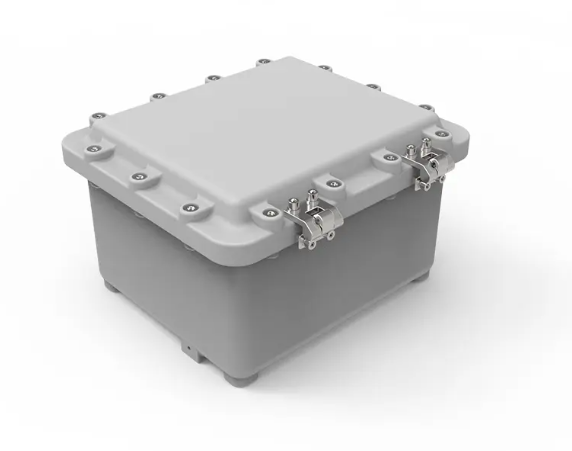
For projects requiring enclosure-based electrical arrangements, Sunleem EEW offers the EJB Series Explosion-proof Empty Enclosure. According to the supplied product specifications, it is suitable for gas explosion hazardous Zones 1 and 2 in groups IIA and IIB. The stated dust applications cover groups IIIA, IIIB, and IIIC in Zones 21 and 22. Buyers should verify the exact product marking and certificate before specifying the enclosure.
An empty enclosure is not an exit light, and its suitability depends on the intended application and configuration. Engineers should review internal heat generation, cable entries, installation conditions, and any applicable certification restrictions. The enclosure should not be assumed suitable for a completed electrical assembly without checking the relevant requirements.
A Practical Checklist Before Purchase
A structured review helps project teams compare products using consistent criteria. First, confirm the hazardous area classification and applicable regulations. Next, obtain the product certificate, technical data sheet, installation instructions, and marking details. Check permitted zones, gas or dust groups, temperature limits, ambient conditions, and mounting requirements against the site documentation.
Procurement teams should also clarify maintenance access, spare parts, emergency testing, and replacement procedures. When several suppliers are involved, a common document checklist makes technical comparisons easier. Differences between the specified product and the supplier’s offer should be resolved before an order is placed. This step can reduce delays caused by missing documentation or incompatible accessories.
Base the Decision on Verified Requirements
Certification helps determine whether an exit light is suitable for a defined hazardous environment, but it cannot replace checks for visibility, emergency power, environmental protection, and installation compatibility. Buyers should evaluate these factors together and confirm them against project documents.
Careful verification also applies to associated enclosures and cable fittings. Reviewing each component before purchase gives engineers and contractors a clearer basis for installation planning, compliance records, and future maintenance. The final choice should follow the site’s documented requirements and the exact scope of the product’s certification, rather than relying on general marketing descriptions.
