A tube fabrication investment affects far more than cutting speed; it shapes job scheduling, operator workload, material usage, and the consistency of finished components. Before comparing quotations, manufacturers need to understand the profiles they process, the complexity of their parts, and the level of automation their production flow can support.
A CNC tube laser cutting machine should be assessed against these practical requirements rather than selected on power ratings alone. Hymson Laser Machinery provides tube laser processing options, but buyers still need a structured checklist to determine whether a particular configuration fits their operation.
Confirm the Working Range and Cutting Requirements
Start by listing the tube and profile dimensions that appear in regular production. Round, square, rectangular, and structural profiles may require different clamping and positioning capabilities, while outside diameter, section width, wall thickness, and stock length determine the machine’s usable range. The review should cover both the smallest parts and the largest routine workpieces. A configuration suited to common orders may still be unsuitable for occasional jobs that exceed its handling limits.
Material specifications should be documented alongside dimensional requirements. Carbon steel, stainless steel, and aluminum have different processing characteristics, and wall thickness affects the parameters needed to achieve acceptable edges. Buyers should ask suppliers to clarify the supported material and thickness ranges for the proposed configuration, rather than assuming that one specification applies to every alloy. Representative samples can help verify the stated capabilities under realistic conditions.
Part geometry also deserves attention before a purchase decision. Holes, slots, intersecting cuts, angled ends, and features distributed across multiple faces place different demands on positioning accuracy. Drawings should identify critical dimensions and tolerances so that the supplier can recommend relevant tests. A useful demonstration includes parts that reflect the factory’s actual workload, not just simple shapes that are easy to cut.
Examine Controls and Programming Capabilities
Control software affects how quickly a job moves from engineering to production. Buyers should examine how programs are imported, edited, stored, and retrieved, as well as how the system displays alarms and operating status. Clear job identification and revision management help prevent outdated cutting files from being used. These functions become especially valuable when similar components differ by only a few holes or dimensions.
Programming requirements vary with part complexity and order frequency. Shops that manufacture custom frames may need frequent changes to feature locations, while repeat production may depend more on retrieving validated programs and reproducing established settings. The supplier should explain which programming functions are included, which require additional software, and what training operators will receive. Practical demonstrations reveal more than a feature list alone.
Process monitoring should also form part of the evaluation. Operators need to recognize abnormal cutting conditions, identify relevant warnings, and follow a clear recovery procedure. Buyers can ask how the control system records job information and whether production data can support quality reviews. Reliable records help maintenance and production teams investigate recurring defects without relying entirely on recollection.
Review Automation and Factory Integration
Automation on a tube laser cutting machine can reduce manual handling, but its value depends on how well it fits the factory’s production pattern. Loading and unloading options may be useful for long stock, heavy profiles, or repeated high-volume orders. Short batches with frequent profile changes may require a different balance between automated handling and setup flexibility. The expected number of changeovers per shift should inform the decision.
Integration with upstream and downstream processes is equally important. Material storage, cutting, part sorting, welding, and assembly must work as a connected sequence. Buyers should examine how incoming stock reaches the machine and how finished parts leave the cutting area without obstructing other operations. Available floor space, forklift access, and the length of raw material can all affect the practical value of an automation package.
Communication interfaces deserve explicit confirmation. Where a factory relies on production planning, inventory, or manufacturing execution software, the supplier should clarify which data can be exchanged and which protocols or options are supported. Compatibility should be verified with the actual systems in use rather than inferred from general claims about connectivity. Clear interface requirements help avoid costly integration work after installation.
Assess Service, Operating Costs and Model Suitability
Service arrangements can influence equipment availability throughout its working life. Buyers should ask about installation, operator training, preventive maintenance, spare-part availability, remote assistance, and on-site support. Response expectations should be documented, especially for factories where a machine stoppage could interrupt several downstream operations. The service plan should also identify which maintenance tasks are expected to be handled by factory personnel.
Operating cost comparisons need to account for more than the purchase price. Electricity, assist gas, consumables, maintenance, labor, scrap, and secondary finishing all contribute to the cost of producing acceptable components. A trial run using representative jobs can provide a more useful estimate than a quoted cutting speed alone. Buyers should record setup time, actual processing time, part quality, and any manual work required after cutting.
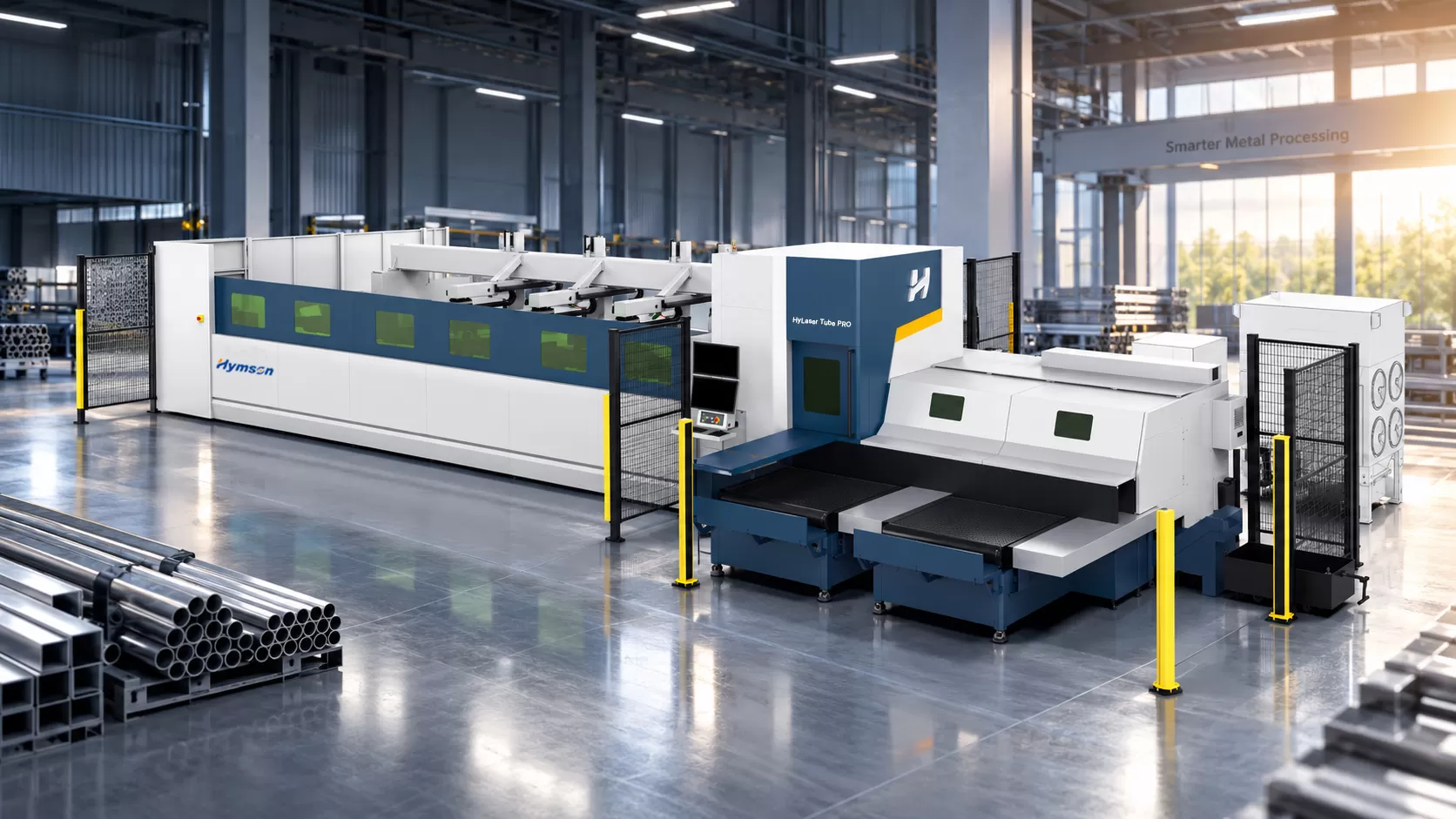
For model evaluation, the HyLaser Tube PRO is specified with laser power options of 3–6 kW. That range provides a concrete starting point for discussing application requirements, but power alone does not determine suitability for every tube size or material. Buyers should confirm the selected configuration’s supported profiles, dimensional limits, cutting capabilities, automation options, and official technical specifications before making comparisons with other machines.
Conclusion
A well-founded purchase decision connects technical capability with daily operating needs. Working range, programming, automation interfaces, service coverage, and total operating cost should all be reviewed against actual production requirements.
Testing representative parts and documenting the results gives buyers a stronger basis for comparing equipment than relying on a single demonstration or headline specification. Hymson Laser Machinery can be assessed through this process alongside other suppliers, with the final selection based on verified capabilities, integration requirements, and the factory’s expected workload.
