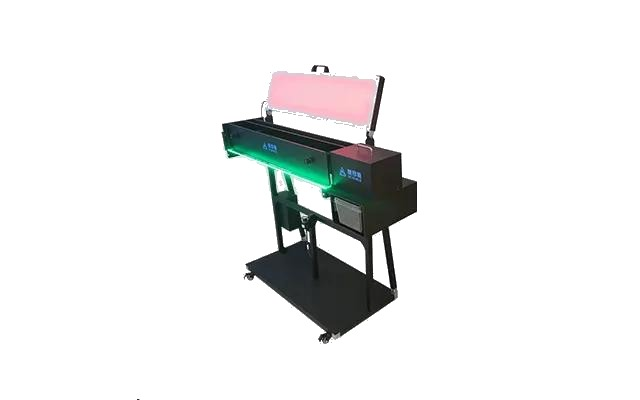
A reliable animal behavior study is easier to manage when the workflow is planned from the biological question to the final dataset. Define what you need to learn, which behavior is relevant, and what change would support the hypothesis.
This makes equipment selection more purposeful and helps connect each measurement with a clear experimental objective, while also making later analysis easier to organize.
Define the Behavioral Endpoint
The first practical decision is identifying the behavior that will serve as the primary endpoint. A study of motor impairment may examine gait, coordination, endurance, or strength.
Research on learning may focus on latency, correct choices, or avoidance, while anxiety, fear, social interaction, and reward studies require different behavioral measures.
This distinction matters because a familiar test is not automatically appropriate for every question. The experimental paradigm should produce observations that can be interpreted within the biological model being studied.
Match the Test to the Study Design
Once the endpoint is defined, determine how the behavior will be measured. Research teams should consider the animal model, number of groups, testing frequency, expected duration, and whether repeated measurements are needed.
The choice between manual observation, dedicated apparatus, and automated tracking depends on the behavior and the type of data required.
A broad animal behavior research equipment portfolio can support different stages of this process. The official BioMed Easy product range includes motor coordination, learning and memory, anxiety/fear/emotion, reward and addiction, and video tracking categories.
It lists products such as rodent gait analysis systems, RotaRod, Grip Strength Meter, T-Maze, Y-Maze, shuttle avoidance, fear conditioning, and open-field systems.
Plan Controls and Reduce Experimental Bias
Equipment setup should be considered alongside experimental design. Before testing
Equipment setup should align with experimental design. Before testing, define groups, experimental units, sample size, inclusion/exclusion criteria, and primary outcomes. Randomization and blinding—recommended by the NC3Rs to reduce bias—should be considered where appropriate, along with comparator groups.
Standardization is equally important. Keep handling, test timing, chamber configuration, observation zones, and other relevant conditions consistent across groups. Record factors that could influence behavior so that procedural variation is not mistaken for a treatment effect.
Make Data Collection Part of the Workflow
The data process should be considered before the first subject enters the apparatus. Decide which raw observations should be captured, what parameters will be extracted, and how data will be checked before statistical analysis. A defined process can reduce unnecessary data collection and make comparisons across subjects more consistent.
Video-based analysis is especially valuable when movement, trajectory, location, or social interaction are key endpoints. BioMed Easy’s SANS-AI Video Tracking Software uses deep-learning key-point detection to identify animal contours, nose, body center, and tail base.
It supports Morris Water Maze, Barnes Maze, T-Maze, Y-Maze, Open Field, fear conditioning, and social interaction studies—and provides trajectory/heatmap visualization, customizable observation areas, and real-time or offline analysis.
Define the Output Before Running the Experiment
A behavioral workflow becomes clearer when the final dataset is defined in advance. Researchers should know which measurements are primary, which are exploratory, and how raw observations will be transformed into analyzable variables.
Depending on the paradigm, outputs may include movement parameters, time-based measures, spatial distribution, event counts, or behavioral states.
Clarity in the behavioral workflow improves when the final dataset is defined upfront. Researchers should distinguish primary vs. exploratory measurements and specify how raw observations will be converted into analyzable variables—e.g., movement parameters, time-based metrics, spatial distributions, event counts, or behavioral states.
This also helps with reporting. Consistent file names, subject identifiers, trial definitions, and parameter settings can make datasets easier to review and reproduce. When multiple cohorts or experiments are involved, standardized data handling becomes particularly useful for identifying differences that are biological rather than procedural.
Build a Workflow That Can Grow With the Study
Animal behavior research may begin with one behavioral assay and later expand into complementary tests. For example, a neurological study may combine gait assessment with motor coordination, while a cognitive project may use maze testing together with automated video analysis. Planning how systems and datasets will work together can make future expansion more manageable.
The goal is not to select the largest equipment portfolio. It is to create a workflow in which the research question, behavioral paradigm, acquisition method, and analysis process support one another without adding unnecessary complexity.
Work with a Specialized Research Partner
BioMed Easy Technologies focuses on laboratory animal and neuroscience research equipment as a subsidiary of SANS Biotechnology. Its official site states that the company was founded in 2016, holds CE and ISO9001 certifications, supports more than 3,000 laboratories globally, and provides technical support, training, and after-sales service.
As a manufacturer with in-house R&D and manufacturing facilities, the company supports laboratories comparing equipment, software, and workflow requirements.
Explore the official product portfolio to compare available systems and identify a setup suited to your animal model and behavioral endpoints. Contact the team to discuss your research application and obtain product or technical support for the next stage of your study.
