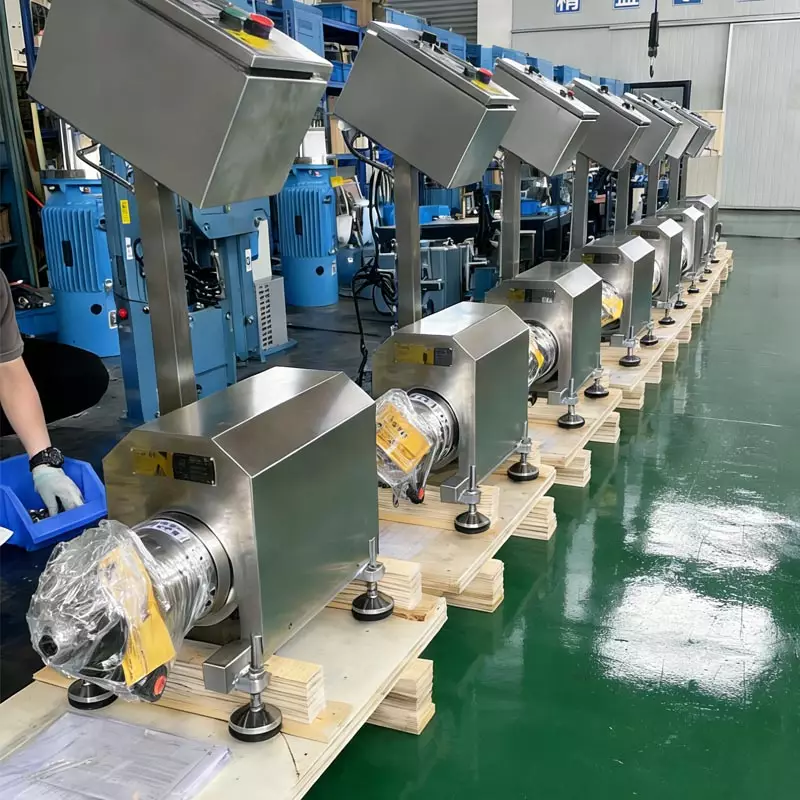
Selecting an industrial mixing equipment supplier involves more than comparing prices, motor power, and production capacity. For manufacturers in chemicals, coatings, cosmetics, pharmaceuticals, and other process industries, equipment reliability and consistent production quality are equally important. Certifications provide useful evidence of a supplier’s quality management practices and regulatory awareness. However, buyers must understand what each certificate covers, whether it remains valid, and how it relates to the equipment and intended application.
A structured verification process helps procurement teams assess suppliers objectively, reduce compliance risks, and avoid costly problems after installation. Rather than treating certification logos as automatic guarantees, buyers should examine the underlying documentation and determine whether the supplier can meet their operational requirements.
ISO 9001: Quality Management System Certification
ISO 9001 is one of the first credentials worth checking when evaluating the high shear mixer manufacturers. It establishes requirements for a quality management system, covering areas such as process control, customer requirements, performance evaluation, and continual improvement. Certification indicates that an independent certification body has assessed the organization’s quality management system against the applicable standard. It does not automatically certify every machine or guarantee identical results in every application.
Buyers should request a copy of the certificate and examine the registered company name, certification scope, standard edition, issuing body, and validity status. The scope matters because certification may cover particular manufacturing or service activities rather than every operation performed by a business.
For international procurement, buyers can check eligible accredited certificates through the global certification database or contact the issuing certification body directly. ISO itself does not issue company certificates, so a supplier’s claim should always identify the actual certifier.
Product Safety and Market-Specific Compliance
A quality management certificate is not a substitute for product compliance. Depending on the destination market, equipment design, and intended application, buyers may need additional documentation addressing electrical safety, machinery safety, electromagnetic compatibility, or other applicable requirements.
For example, equipment placed on the European market may fall under relevant EU legislation. The precise obligations depend on the machine, its configuration, and the rules in force when it is placed on the market. A CE marking should therefore be supported by the appropriate conformity documentation, rather than accepted as a standalone quality endorsement.
Before signing a contract, request the declaration of conformity where applicable, relevant test reports, and identification of the standards used. Confirm that the documents cover the quoted model and configuration. For projects involving hazardous areas or specialized processes, determine whether additional certifications or protective measures are legally required.
Industry-Specific Certifications and Hygiene Requirements
Not every mixing application requires the same compliance documentation. Buyers serving pharmaceutical, food, or personal-care markets should identify the hygiene, material compatibility, and process-control requirements relevant to their products before approving a supplier.
For pharmaceutical production, applicable requirements may include Good Manufacturing Practice (GMP) obligations for the overall manufacturing process. However, GMP compliance should not be confused with a universal certificate for mixing equipment. Buyers should clarify which requirements apply to the equipment, facility, and finished product.
Likewise, food-contact applications may require evidence that product-contact materials meet relevant regional regulations. Request material specifications, traceability records, and supporting conformity documents where applicable. These records help procurement teams assess whether the proposed equipment is suitable for the intended production environment.
Environmental and Occupational Safety Credentials
Environmental management and occupational health and safety certifications can provide additional insight into a supplier’s operational practices. ISO 14001 addresses environmental management systems, while ISO 45001 covers occupational health and safety management systems. Neither standard is universally mandatory for mixer suppliers, but either may be relevant to corporate procurement policies or project requirements.
Buyers should confirm that the certificates belong to the actual contracting entity and cover the relevant operations. These credentials can support supplier-risk assessments, although they do not replace equipment-specific safety reviews, installation assessments, or applicable legal compliance checks.
How to Evaluate Certification Claims from High Shear Mixer Manufacturers
Certification documents are most useful when combined with practical supplier evaluation. Procurement teams should check certificate validity, issuing-body credentials, and scope before comparing technical proposals. They should also request quality-control procedures, inspection records, material traceability information, and documented processes for handling nonconforming products.
A supplier’s technical capability matters just as much as its paperwork. Buyers should assess whether the manufacturer understands the required viscosity range, batch size, shear conditions, temperature limits, and production environment. Sample testing, application trials, and acceptance criteria can help determine whether the proposed equipment performs as required.
Service arrangements also deserve attention. Confirm the availability of spare parts, maintenance guidance, technical support, and documentation for installation and operation. These practical details help establish whether the supplier can support the equipment throughout its working life.
FLUKO: Quality Management and Process Engineering Experience
As one of the high shear mixer manufacturers, FLUKO provides a relevant example of a supplier whose quality-management credentials form part of its manufacturing background. The company obtained ISO 9001 system certification from TÜV Rheinland in Germany in 2006 and subsequently began developing its global market.
FLUKO also reports more than 10,000 successful project experiences across multiple industries. Its stated focus is on technological innovation, quality excellence, and customized process-intensification solutions. For buyers evaluating a potential long-term supplier, these reported project experiences provide useful context for discussions about application requirements and engineering support.
Nevertheless, purchasers should request the current certificate and verify its scope and validity rather than assume that a historical certification claim establishes present status. They should also evaluate the proposed equipment against their own process specifications, compliance obligations, and acceptance criteria.
Make Certification Verification Part of Supplier Selection
Choosing industrial mixing equipment is a decision that affects product consistency, operational safety, maintenance costs, and long-term production performance. Certifications help buyers evaluate a supplier’s management systems and demonstrate whether relevant compliance requirements have been addressed, but their value depends on authenticity, scope, and applicability.
A disciplined procurement process combines document verification with technical assessment, application testing, and service evaluation. By applying these checks before signing a contract, businesses can make better-informed decisions and build stronger partnerships with equipment suppliers such as FLUKO.
