An established appliance brand entering professional kitchens needs a product strategy shaped by cooking work, not household retail habits. A restaurant replaces equipment to solve a station problem, maintain service, or support a new menu. Similar-looking cookers therefore compete on more than appearance and headline wattage.
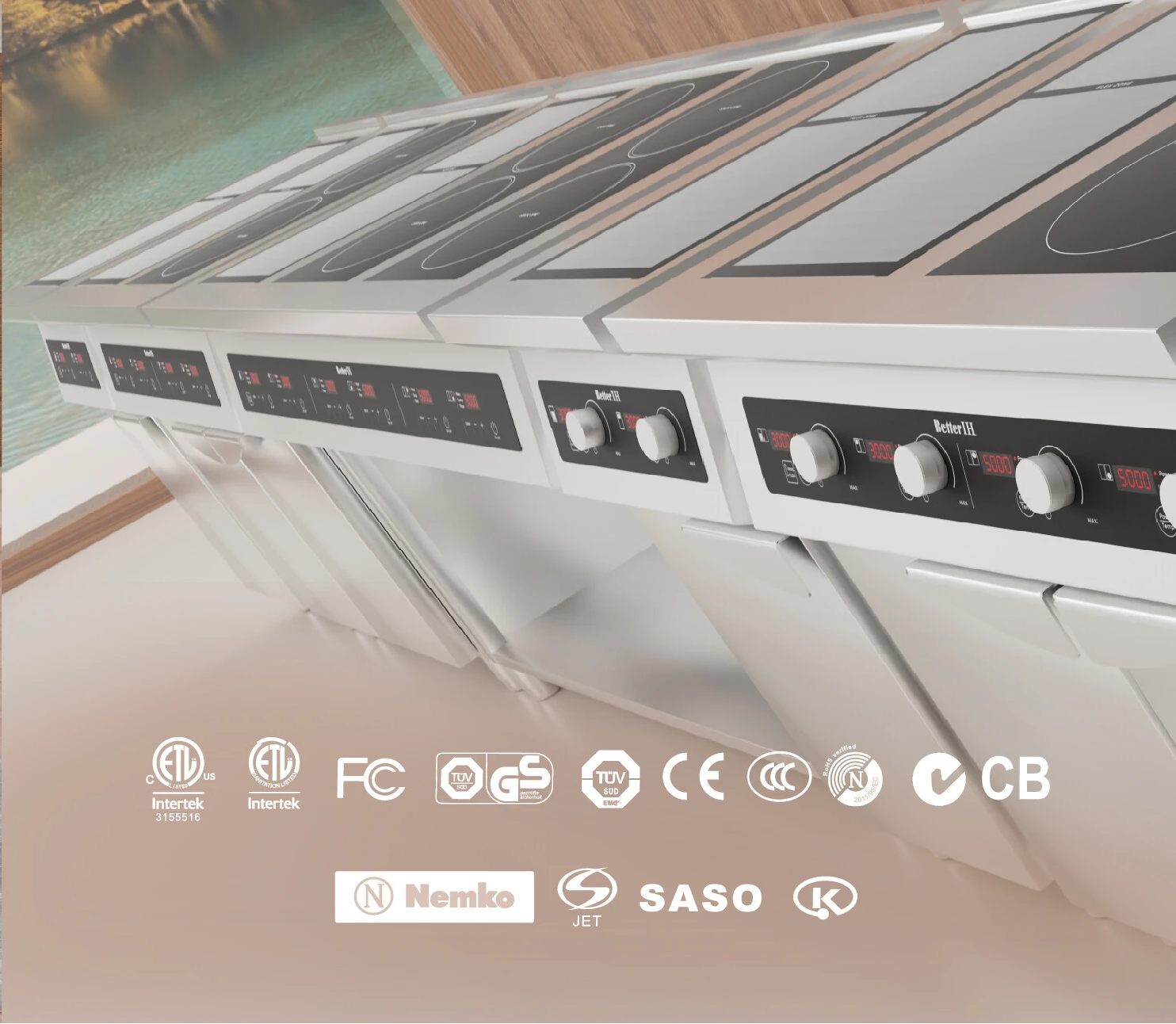
The range supplied by Better Induction includes table-top and drop-in cookers, induction fryers, buffet stations, and integrated cooking islands. Those formats serve different kitchen layouts and operating tasks.
Map Commercial Induction Cooking Equipment to Kitchen Tasks
Portfolio planning starts with the jobs that customers perform repeatedly. Segmenting equipment by cooking operation produces clearer distinctions than dividing it into entry-level, mid-range, and premium prices alone.
Separate preparation, service, and holding
Preparation stations handle boiling, simmering, frying, or wok cooking. Service areas need accessible controls and predictable operation during busy periods. Buffet and catering settings focus on food presentation and holding arrangements. Each application calls for different construction, operating controls, and kitchen placement.
An initial worksheet describes the food, vessel type, likely duty cycle, cleaning requirements, and installation position for each station. Equipment that performs the same function under almost identical conditions should not automatically become a separate product family.
What a Commercial Kitchen Equipment Manufacturer Must Specify
Cooking volume affects capacity, but does not tell the whole story. Counter depth, adjacent equipment, operator reach, available circuits, and ventilation arrangements determine whether a model fits an actual workspace. Suppliers need comparable product data before finalizing an assortment.
For example, a table-top cooker offers flexibility for an additional station, while a drop-in unit requires planned integration. Application-based categories help sales teams explain that difference without relying on vague premium positioning.
Create Tiers Around Installation and Operating Demands
A useful tier separates different installation and cooking demands. Power alone cannot establish the difference.
Define a practical opening range
General-purpose cookers give distributors a starting point. Better Induction’s BT-350A3 table-top cooker has a rated 3500W input at 220–240V, ten power levels from 500W to 3500W, and knob adjustment. Those specifications describe a concrete application rather than an abstract performance tier.
The opening range identifies intended regions and electrical supply assumptions. Marketing material also explains the vessels, workspace, and cooking jobs for which each configuration is designed.
Reserve specialist products for defined needs
The second tier is defined by fixed installation or specialized food preparation, not just a higher selling price.
The BI500F drop-in model is rated at 5000W and specifies a 380–420V three-phase supply. Its separate control box changes the integration discussion, not simply the power comparison. Dedicated induction fryers and cooking islands introduce another level of complexity.
They require different explanations, demonstrations, and installation checks. Adding these products only when a target customer has a relevant task keeps the commercial range understandable.
Set a Launch Order That Matches Channel Readiness
The best sequence depends on the brand’s existing distributors and service capabilities. Demand alone is insufficient when installation requirements exceed the channel’s capabilities.
Launch broad-use products before niche configurations
An opening wave works best when distributors already understand the recurring tasks the equipment addresses. Commercial cooker selection can then be tested through distributor feedback, sample evaluations, and specific customer enquiries.
A commercial kitchen equipment manufacturer with design and manufacturing capabilities can support the discussion of model selection and modifications.
Use demand evidence to sequence later releases
Consider adding new types of commercial induction cooking equipment when customer enquiries, pilot installations, or confirmed projects show a clear need. A catering-focused distributor might request buffet stations earlier than a restaurant equipment dealer. A central kitchen project could prioritize integrated cooking equipment instead.
A later wave earns its place through evidence of demand: repeat enquiries, trial outcomes, distributor orders, and available installation support. This is a portfolio sequencing decision, not a substitute for the operational launch checklist.
Keep the Range Coherent as It Expands
Consistency matters because customers must understand the range across several formats. Common documentation conventions and recognizable control terminology improve clarity, even when the products have different physical designs.
Standardize the customer-facing information
Every product sheet shows model identity, supply requirements, rated power, external dimensions, installation type, and intended use. Where a model includes separate controls or multiple cooking zones, the diagram matches the exact configuration offered. Product managers also record why each model exists.
That explanation discourages unnecessary overlapping models.
Use customization for a specific purpose
Better Induction supports changes to construction, functions, software, and user interaction across its induction portfolio. Those options are useful when a brand needs a consistent interface or a distinct installation arrangement. They are less valuable when a cosmetic change adds complexity without improving the cooking task.
The full commercial induction cooking equipment range provides a useful starting point for evaluating these different formats. Selection should remain tied to operating requirements rather than catalogue breadth.
Conclusion
A commercial-first portfolio succeeds when each product answers a recognizable kitchen need. Start with the cooking jobs, define practical tiers, and introduce specialized equipment only when channels and customers are ready.
Installation information and consistent documentation make the resulting range easier to sell, specify, and support. Distinguishing flexible countertop equipment from fixed and integrated stations also prevents a power-only assortment. The next product arrives when its cooking role and customer demand are demonstrably different.
