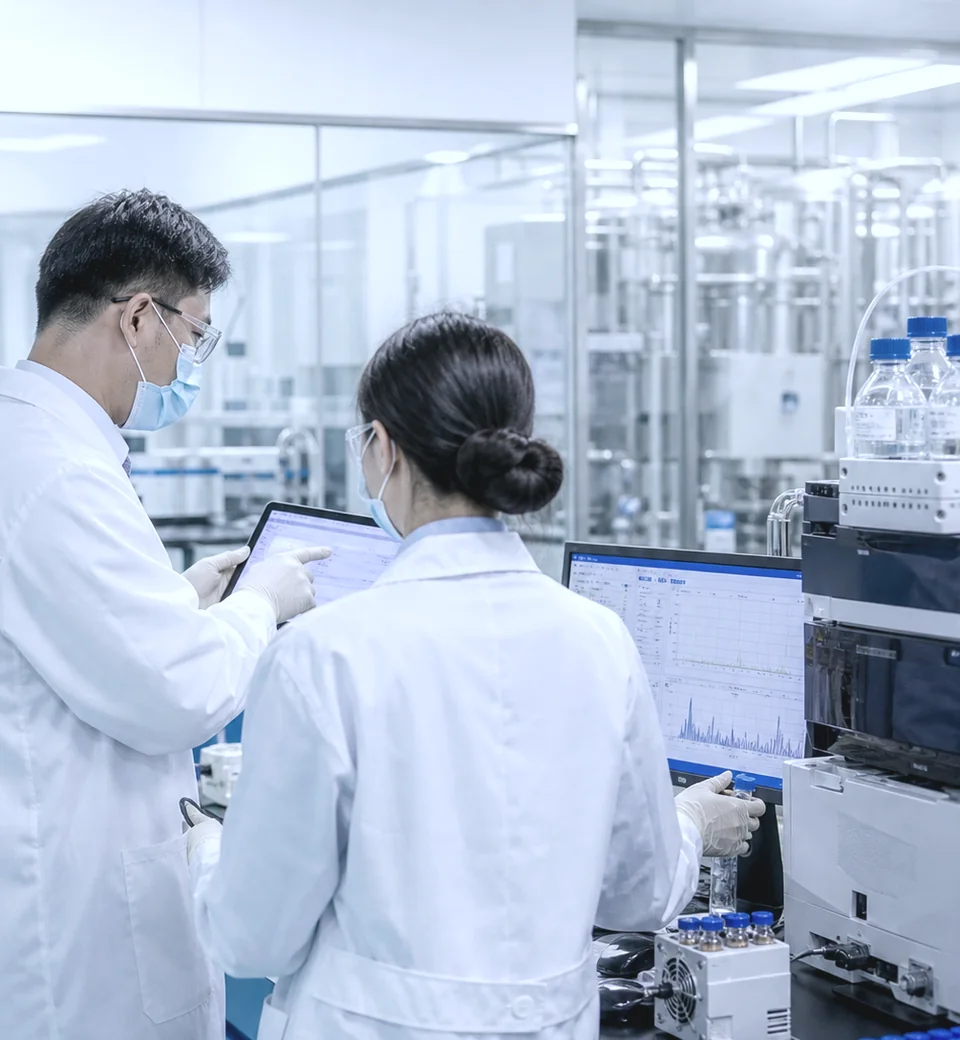
Automation is changing how complex chemical processes are controlled, documented, and scaled. In peptide manufacturing, its value extends beyond reducing manual work. Automated equipment, standardized procedures, and integrated analytical data can help improve process consistency, strengthen traceability, and support more predictable production planning. However, automation alone cannot resolve every challenge associated with difficult sequences, purification, or scale-up.
For biotechnology companies and pharmaceutical developers, the central question is how to combine technology with process knowledge and quality management. As demand for complex peptide molecules grows, peptide manufacturers must evaluate automation as part of a broader manufacturing strategy that connects laboratory development with reliable production.
Why Automation Matters in Peptide Manufacturing
Peptide synthesis involves multiple operations, including amino acid coupling, deprotection, cleavage, purification, and often lyophilization. Each stage presents opportunities for process variation. Manual handling, inconsistent execution, and incomplete data capture can complicate investigations when a batch fails to meet its specifications.
Automation can standardize repeatable tasks, control selected operating parameters, and reduce reliance on manual intervention. Depending on the system, it may also record process conditions and generate data for subsequent review. These functions can help teams identify deviations earlier and compare performance across production runs.
For peptide manufacturers, the objective is not simply to automate as many steps as possible. It is to identify operations where automation delivers measurable improvements in reproducibility, safety, throughput, or documentation without introducing unnecessary complexity.
Where Automation Creates the Greatest Value
Automated Synthesis and Process Control
Automated peptide synthesizers can execute programmed cycles for reagent delivery, coupling, washing, and deprotection. Precise control of these operations supports repeatability, particularly when a sequence requires many synthesis cycles.
Nevertheless, programmed execution does not guarantee a successful product. Difficult sequences, aggregation, steric hindrance, and incomplete reactions may still affect crude peptide quality. Process parameters must be developed for the specific molecule, and analytical testing remains necessary to confirm the outcome.
Purification and Analytical Integration
Purification can become a major constraint as production volumes increase. Automated chromatography systems can regulate gradients, flow rates, fraction collection, and other operating conditions. When combined with suitable analytical methods, these systems help operators assess separation performance and identify fractions that meet predefined criteria.
Automation may also improve data consistency by linking sample identifiers, analytical results, and batch records. However, chromatographic resolution, product recovery, and impurity control still depend on method design and the characteristics of the peptide.
Documentation and Batch Traceability
Digital data capture can connect raw material records, equipment histories, process parameters, and analytical results. This creates a clearer record of how a batch was produced and evaluated.
The FDA’s guidance on good manufacturing practices for active pharmaceutical ingredients emphasizes controlled documentation, production records, deviation investigations, and review of quality results. These principles provide a useful framework for evaluating automated manufacturing systems in regulated settings.
Automation Must Be Designed Around Scale-Up Requirements
A process that performs well at milligram or gram scale may behave differently when transferred to larger equipment. Reagent distribution, mixing, heat transfer, filtration, and purification capacity can all influence production outcomes. Automation can improve control over selected variables, but it cannot eliminate the need for scale-up studies.
This is where process development becomes essential. Teams need to determine which parameters are critical, establish acceptable operating ranges, and verify that automated operations remain suitable as batch size increases. For peptide manufacturers preparing for larger production volumes, pilot-scale trials can reveal equipment limitations before they affect routine manufacturing.
A practical automation strategy should therefore connect process development, equipment qualification, analytical testing, and production planning. It should also account for cleaning, maintenance, operator training, and system validation where applicable.
What Buyers Should Expect from Peptide Suppliers
Automation capabilities can be difficult to compare through equipment lists alone. Buyers should ask how technology supports actual product quality and manufacturing performance rather than assuming that a highly automated facility is automatically more reliable.
When assessing peptide suppliers, procurement and technical teams should consider:
Process control: Which operations are automated, and how are critical parameters monitored?
Data integrity: Can production records be linked to the correct batch, reviewed, and retrieved?
Analytical support: How are identity, purity, related impurities, and other relevant quality attributes evaluated?
Scale-up capability: Can the supplier explain how process conditions are assessed when production volume increases?
Change management: How are changes to equipment, procedures, or analytical methods evaluated and documented?
These questions help distinguish automation that supports a validated manufacturing approach from technology adopted primarily for operational convenience. For pharmaceutical projects, the applicable quality requirements depend on the product’s intended use and development stage.
UTIDE’s Role in Peptide Industrialization
UTIDE positions its business around peptide industrialization, combining process development, scale-up support, quality systems, and technical expertise. Its stated capabilities include support for long-chain peptides, difficult sequences, modified peptides, conjugation, and purification optimization. The company also describes GMP-aligned quality management, batch traceability, and analytical testing support.
For businesses evaluating UTIDE peptide synthesis, the relevant discussion is how process knowledge and manufacturing controls can support a project’s specific requirements. Automation should be assessed alongside sequence complexity, purification needs, batch documentation, and plans for increasing production volume.
A useful technical discussion with UTIDE can establish which operations require closer process control, what analytical evidence is available, and which development activities may be needed before scale-up. Buyers should confirm project-specific equipment capabilities and automation arrangements directly rather than assume that every operation is fully automated.
Building a Smarter Manufacturing Strategy
Automation is most valuable when it addresses a defined process challenge. It can improve repeatability, support data collection, and strengthen manufacturing oversight, but it cannot replace scientific judgment or appropriate quality controls.
For peptide suppliers and buyers alike, successful peptide industrialization depends on integrating equipment, process development, analytical testing, and traceable documentation. Companies considering UTIDE peptide synthesis should evaluate these elements together, particularly when moving from early development toward larger batches.
Ultimately, peptide industrialization requires more than automated equipment. A coordinated approach to process design, scale-up, and quality management gives manufacturers a stronger basis for consistent production. For organizations planning complex peptide projects, UTIDE peptide synthesis can be explored through discussions focused on technical feasibility, manufacturing requirements, and the evidence needed to support reliable scale-up.
