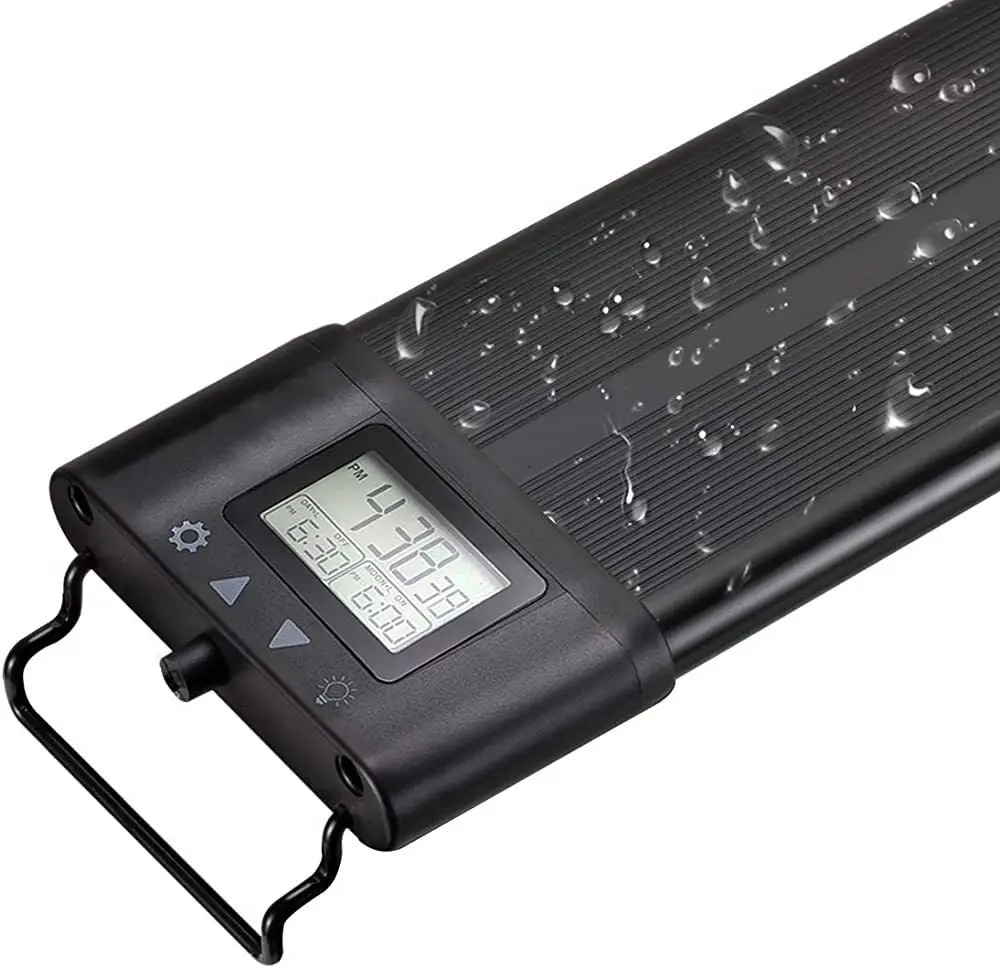
A suitable Aquarium LED Light should be selected according to the tank’s purpose rather than simply its size or appearance. A 12–18 inch home aquarium, for example, may benefit from adjustable intensity and automatic timing, while a reef display can require more deliberate spectrum control. HiTauing approaches these differences through practical lighting configurations, giving buyers a clearer way to compare brightness, color, installation, and control functions before making a purchase.
Home Aquariums Need Simple Control
For ordinary home fish tanks, convenience often matters more than highly specialized lighting parameters. Fishkeepers may want a natural daytime appearance, a softer evening atmosphere, and a predictable daily schedule without adjusting the lamp manually. An integrated timer can therefore make routine maintenance easier while keeping lighting periods consistent.
The Smart Full Spectrum WRGB Fish Tank Light With Timer Automatic On/Off is designed for 12–18 inch fish tanks and provides 10 intensity levels. Its six single-color options, white lighting, daylight mode, and moonlight mode give household users several ways to adjust the visual atmosphere. Such flexibility is useful for families who want attractive presentation without installing a complicated control system.
A practical home solution should balance ease of operation, visual comfort, and sufficient adjustment range rather than adding functions that may never be used.
Aquascaping Tanks Require More Precise Light Management
Plants respond differently to changes in intensity and spectrum, so aquascaping enthusiasts generally pay closer attention to how light interacts with plant color, growth patterns, and tank depth. A fixed output may be adequate for a basic setup but can become restrictive once different plant species are introduced.
For this application, buyers can evaluate whether an Aquarium LED Light offers adjustable intensity and multiple color channels. These controls allow the appearance of green foliage, red plants, wood, stones, and substrate to be balanced according to the visual design of the aquarium. Gradual adjustments are also preferable to making large changes in lighting levels from one day to the next.
The key consideration is not simply maximum brightness. Consistent scheduling, controllable output, and an appropriate spectrum provide greater flexibility as the aquascape develops.
Reef Tanks Demand Different Lighting Priorities
Saltwater and reef aquariums present another set of requirements. Corals, marine organisms, and the surrounding water can create a very different visual environment from freshwater tanks. Buyers may therefore examine spectrum adjustment, day-and-night transitions, brightness control, and the physical construction of the fixture before making a purchasing decision.
HiTauing offers reef-oriented models such as the PAL-FR Seawater Reef LED Aquarium Light, which features day and night control, adjustable color temperature, adjustable brightness, and sunrise and sunset simulation. Its 145 mm lamp body is designed for broader light distribution, making the configuration relevant to larger or deeper displays where coverage deserves particular attention.
For reef applications, the evaluation should focus on how the lighting system fits the livestock, tank dimensions, operating schedule, and desired visual effect rather than relying on a single brightness figure.
Commercial Displays Prioritize Consistency
Retail stores, restaurants, offices, and public exhibition spaces often keep aquariums visible for extended periods. Their lighting needs can differ from those of private hobbyists because the display may be part of a broader customer experience. Stable operation, repeatable schedules, convenient controls, and a clean appearance become especially valuable.
An automated timer can reduce the need for staff to switch lights manually at opening and closing times. Daylight and moonlight settings may also create different viewing environments throughout the day, while adjustable intensity allows operators to adapt the display without replacing the fixture.
For commercial buyers, product evaluation should also include expected service life, spare-part availability, installation requirements, packaging quality, and communication during after-sales support. These details can influence operating costs just as much as the initial purchase price.
Wholesale Buyers Should Compare More Than Features
Different market applications create different purchasing priorities, so wholesalers should avoid judging every model against the same checklist. A home aquarium retailer may value compact dimensions and intuitive controls, whereas a specialist marine supplier could place greater emphasis on spectrum adjustment and waterproof construction.
Sourcing decisions should go beyond just product specifications. The About HiTauing section offers an overview of the company’s manufacturing scope and quality systems, but a complete assessment should also include packaging, logistics, and after‑sales support. Factors such as manufacturing capability, quality inspection procedures, production capacity, delivery coordination, customization options, and after-sales communication can help buyers determine whether a supplier fits their intended market.
HiTauing products cover several lighting configurations, allowing distributors to consider different customer groups instead of relying on one universal fixture. A stronger purchasing decision comes from matching each specification with a clearly defined application.
Building A Practical Product Portfolio
A well-planned aquarium lighting portfolio usually contains several levels of functionality. Entry-level customers may need automatic timing and straightforward brightness adjustment, while experienced hobbyists may look for more detailed spectrum and scheduling controls. Commercial buyers, meanwhile, may prioritize reliability, replacement support, and repeatable operation across multiple installations.
For distributors, the right Aquarium LED Light is consequently the one that fits a specific sales scenario. Tank dimensions, freshwater or saltwater use, plant or coral requirements, mounting conditions, control preferences, and expected operating hours should all be considered before a model is added to inventory.
Product selection also becomes more efficient when suppliers can provide clear specifications, consistent quality standards, realistic production schedules, and responsive after-sales assistance. These factors help reduce uncertainty when products move from wholesale inventory into different customer environments.
Conclusion
Aquarium lighting works best as an application-specific decision rather than a one-size-fits-all purchase. Home tanks benefit from simple automation, aquascaping setups need flexible adjustment, reef systems demand more specialized control, and commercial displays place greater weight on consistency and service support. HiTauing provides different configurations that can be evaluated against these requirements instead of treating every aquarium as the same use case.
For distributors or project buyers that need specifications, product matching, or sourcing information, Contact Us can be used to discuss the intended tank application and appropriate lighting configuration.
About HiTauing
With over 20 years of expertise in aquarium equipment, we deliver reliable, innovative solutions trusted by clients in 50+ countries. Our ISO9001 certified products, global certifications, and end-to-end support make us your ideal partner for aquatic success.
