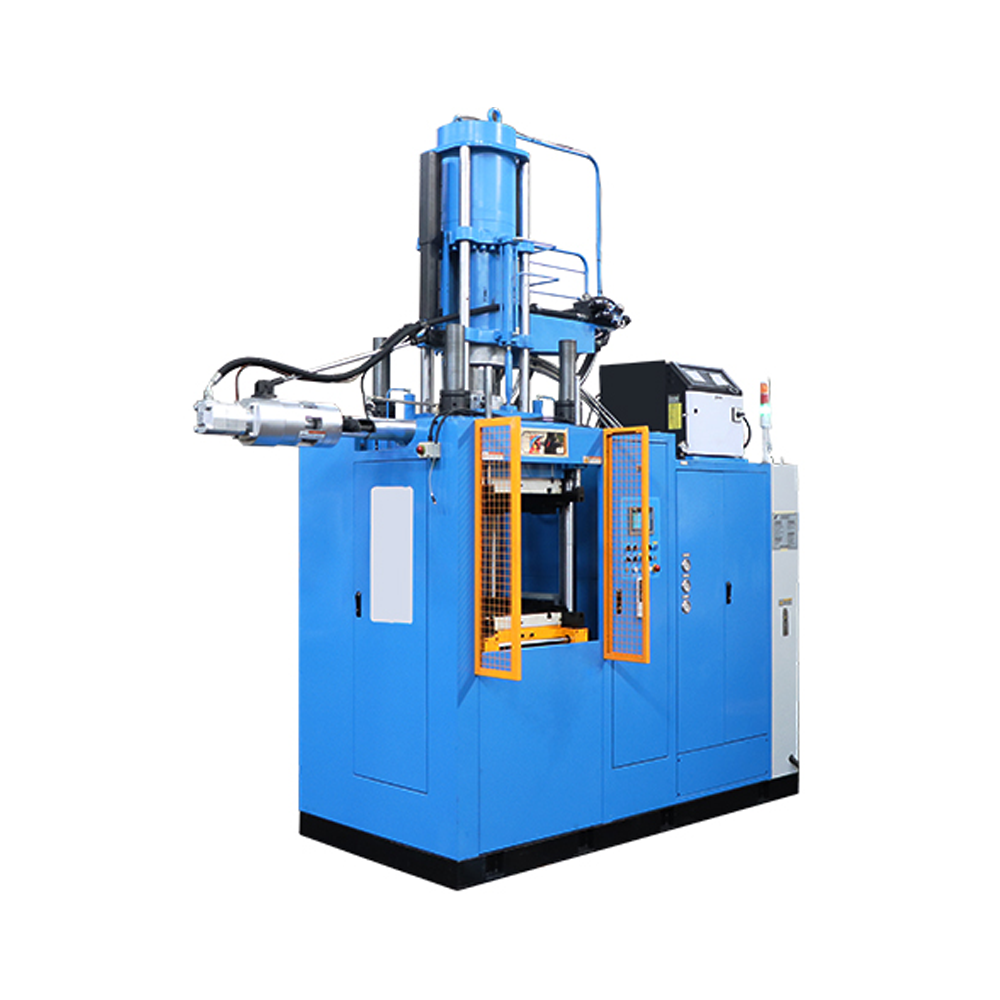
Against the backdrop of today’s rubber and silicone processing industry, automation has emerged as a critical driver for stabilizing product consistency, cutting labor reliance, and delivering high-precision molding outcomes. Renowned for solid structural performance and reliable process control, the vertical rubber injection molding machine is extensively deployed in the production of cable accessories, insulators and sophisticated rubber parts. As manufacturing specifications grow more intricate year by year, the automation level of the vertical injection molding machine has seen remarkable upgrades. Such technical progress effectively meets the industry’s rising expectations for higher efficiency, better operational stability and superior molding accuracy. As a professional developer and supplier of industrial molding solutions, HWAYI has embedded a full suite of automated technologies into its vertical injection molding equipment. This thoughtful technical integration enables the machinery to consistently serve modern manufacturing scenarios with efficient, stable and repeatable production performance.
Intelligent Injection and Process Control Systems
Dynamic adjustment of injection pressure and speed is a core automated feature of vertical rubber injection molding machines. It allows production staff to fine-tune process parameters based on individual mold characteristics, resulting in accurate cavity filling and more uniform product quality. Such flexibility lets the vertical injection molding machine handle diverse rubber and silicone molding tasks efficiently, while keeping manual setup work to a minimum.
Built around Siemens electrical components and PLC monitoring, HWAYI’s HYZ-E series delivers full-process operational management. It can store as many as 300 production recipes, enabling rapid switching between product specifications. USB data transfer also simplifies data archiving and process traceability, making production arrangement and quality control more streamlined.
Automated Temperature, Demolding and Material Handling Functions
Accurate thermal management stands as another vital automated capability of the vertical injection molding machine. PID calibration maintains platen temperature tolerance within ±2°, creating stable curing environments for consistent molding performance. German-sourced insulation panels minimize heat loss, boosting energy efficiency and overall process reliability.
Beyond temperature control, automated demolding setups further elevate machine performance. Compatible with various demolding accessories, the system lowers manual dependence, shortens cycle duration and enhances on-site safety. Optional HTV silicone rubber feeding units also enable automatic material supply, ideal for manufacturing arresters, fuse cutouts and cable joints.
All automation modules are fully coordinated in HWAYI’s overall design logic, guaranteeing smooth workflow transition across injection, curing and demolding stages.
Enhancing Production Efficiency Through Integrated Automation
Modern vertical rubber injection molding machine automation development now centers on holistic system integration, rather than standalone functional upgrades. Today’s vertical injection molding equipment intelligently unites sophisticated control systems, high-precision hydraulics and automated material handling, laying the foundation for uninterrupted, stable mass production.
Upholding rigorous engineering standards, HWAYI optimizes such integrated systems to drastically reduce manual reliance while sustaining consistently high product quality. This enables manufacturers to attain highly predictable production output and markedly enhanced operational efficiency, even amid stringent industrial application requirements.
