Demand for intricate, high‑performance parts is rising across aerospace, medical devices and automotive engineering. Traditional subtractive manufacturing struggles to produce these complex shapes, often suffering poor material efficiency and high production costs.
As industries pursue sustainable, cost‑effective operations, additive manufacturing has become a game‑changing option. Many engineering and procurement teams ask: how does metal 3D printing lower material waste for complex component fabrication?
To understand this change, we can contrast conventional machining with additive processes, and see how digital‑first manufacturing improves material use and redefines industrial production.
The Material Challenges of Traditional Subtractive Manufacturing
Traditional manufacturing methods like CNC machining rely on subtractive processes. Production begins with a solid metal billet, and specialized cutting tools remove excess material to form the final part.
Though highly precise and mature, subtractive approaches are inherently wasteful for complex components. For lightweight aerospace brackets with topology‑optimized curves or intricate internal lattices, CNC machining must cut away large volumes of the original metal block.
Why is the “Buy-to-Fly” Ratio Important?
Aerospace manufacturing relies on the “buy‑to‑fly” ratio, which contrasts purchased raw‑material weight with the finished part’s weight. Complex geometries can push this ratio very high, discarding 80‑90% of raw material as scrap.
For costly high‑performance alloys like Ti6Al4V titanium and Inconel superalloys, this waste brings heavy financial losses. Moreover, complex internal features such as conformal cooling channels cannot be machined from one solid block. They demand separate parts for assembly, raising material use, labor costs and failure risks.
The Additive Paradigm: Building Only What is Needed
Metal additive manufacturing offers an alternative to this subtractive manufacturing paradigm.
Instead of cutting away from a larger block, a metal 3d printer builds components layer by layer directly from a digital CAD file.
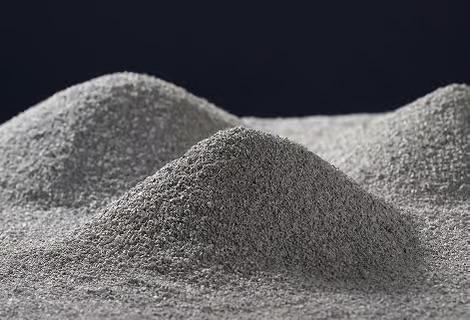
Technologies like Selective Laser Melting (SLM), which are widely utilized in industrial applications, use a high-powered laser to selectively fuse fine metal powder. The machine deposits a thin layer of powder; the laser melts the precise cross-section of the part; the build platform lowers; and the process repeats.
This “layer-by-layer” approach is the primary driver of material efficiency. By design, the process only solidifies the exact amount of metal required to form the final component. When manufacturing complex parts with thin walls, internal cavities, or intricate lattice structures designed for weight reduction, the printer simply deposits and melts powder exactly where the digital model dictates.
This near-net-shape production capability drastically reduces the volume of raw material consumed compared to subtractive methods. The scrap generated is minimal, typically limited to the necessary support structures required to anchor the part during the build process and mitigate thermal distortion.
Powder Recyclability and Closed-Loop Efficiency
The material efficiency of a metal 3D printer extends well beyond the initial build process. In powder bed fusion systems like SLM, a significant amount of the metal powder in the build chamber remains unfused during a print job. This powder acts as a crucial support bed for the part being built.
Can Unfused Metal Powder Be Reused?
Unlike the chips and swarf generated by machining, which often require extensive energy and processing to recycle back into usable stock, the unfused powder in an SLM system is highly recoverable. Modern industrial printing systems feature automated depowdering and sieving equipment.
Once a build is complete, the loose, unfused powder is extracted, filtered to remove any oversized particles or weld spatter, and returned to the system for reuse in subsequent print jobs. This closed-loop material management means that manufacturers can achieve extremely high powder utilization rates. For B2B companies producing high-value components, this capability maximizes the return on investment for expensive metal powders and contributes heavily to a more sustainable manufacturing cycle.
Real-World Application Scenarios: Part Consolidation
Another critical way additive manufacturing reduces material waste is through part consolidation. In traditional manufacturing, complex assemblies often require multiple individual parts to be manufactured separately (each generating its own waste) and then joined using fasteners or welding.
metal additive manufacturing allows engineers to rethink entire design architectures. An assembly that previously required twenty different machined and cast components can often be redesigned and printed as a single, unified piece.
Aerospace Fuel Systems
Consider a complex fuel nozzle in an aerospace engine. Traditionally, this might consist of dozens of intricate parts braided and welded together. Additive manufacturing allows this nozzle to be printed as one single component. This part consolidation not only reduces the overall raw material needed to produce the final system but also eliminates the need for additional materials like screws, bolts, and joining alloys. It streamlines the supply chain, reduces inventory requirements, and results in lighter, stronger components with fewer points of potential failure.
Injection Mold Tooling
In mold manufacturing, creating internal conformal cooling channels is incredibly difficult with conventional drilling, often requiring multiple blocks to be machined and sealed together. Using additive techniques, complex cooling channels that hug the exact contours of the molded part can be printed directly into a single mold insert. This reduces the raw tool steel required, improves the mold’s thermal performance, and drastically cuts down manufacturing time.
Partnering for Additive Success
Transitioning to advanced manufacturing requires not only the right equipment but also deep technical expertise. Companies seeking reliable Original Equipment Manufacturer (OEM) or Original Design Manufacturer (ODM) services often partner with specialized high-tech enterprises. For instance, LiMN 3D is an enterprise focusing on the R&D, production, and application promotion of metal 3D printing equipment. Their focus on SLM forming technologies helps industrial clients in aerospace, automotive, and medical sectors implement efficient, low-waste production strategies.
Driving Sustainable Manufacturing Forward
The adoption of additive manufacturing is shifting how industries approach production economics and resource management. By transitioning from a subtractive mindset to an additive one, organizations can produce complex, highly optimized geometries while maintaining strict control over material consumption.
When evaluating production methods for intricate B2B components, understanding the material utilization benefits of a metal 3D printer is essential. By reducing scrap, enabling powder recycling, and facilitating part consolidation, metal additive manufacturing provides a highly efficient and economically viable pathway for creating the next generation of industrial components.
