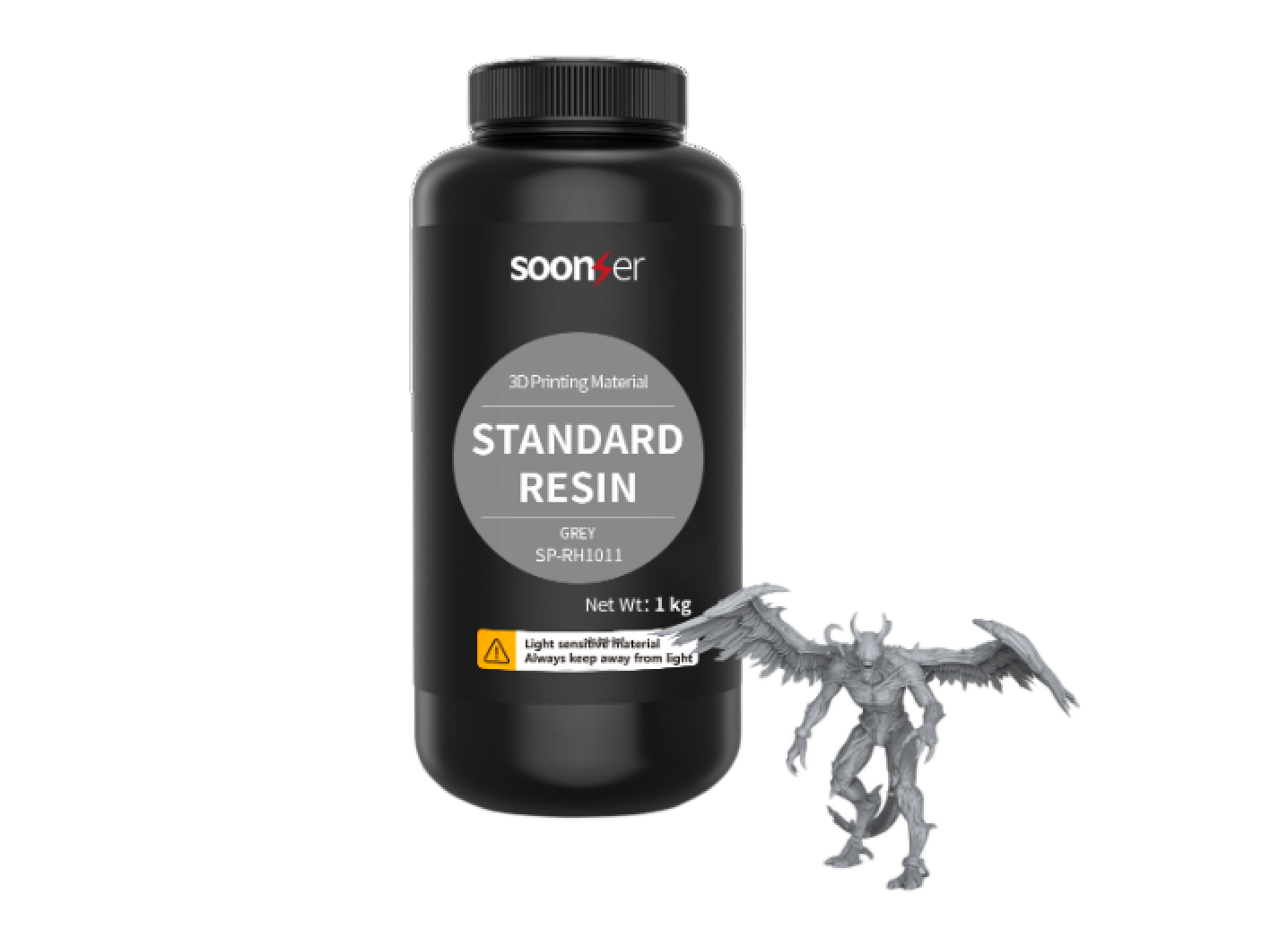
They have built SoonSer since 2013 as a dedicated manufacturer of stereolithography (SLA) and related resin 3D printing systems, committed to delivering complete additive manufacturing solutions. Their offering spans from design, production, materials supply, to logistics and service support, serving industries such as shoe-mold manufacturing, automotive prototyping, product development, art installations, and medical modeling. Leveraging over a decade of R&D and field experience, they aim to help manufacturers, 3D printing service bureaus, and creative studios choose the right technology to match precision, speed, volume, and cost requirements.
How SLA and DLP Technologies Differ in Principle and Performance
SLA 3D printing uses a laser beam to selectively cure a liquid photopolymer resin point by point, gradually building the object layer by layer. This method delivers high resolution, smooth surface finish, and fine detail that make SLA ideal for parts requiring tight tolerances or refined aesthetics. Because the curing happens via a focused laser, SLA consistently produces parts with clean surfaces and reliable small-feature definition — attributes valued by manufacturers, artists, and prototyping services alike.
By contrast, DLP (Digital Light Processing) uses a digital projector or LED-based projector to flash an entire cross-section of the object at once, curing a full layer of resin simultaneously. This “whole-layer” exposure makes DLP significantly faster, especially when printing multiple parts or large batches. Because the light cures the entire layer at once, DLP printers can shorten build times when the build plate is largely filled, which is advantageous for batch manufacturing or service bureaus handling many small parts. However, this speed sometimes comes with trade-offs. While DLP can still deliver high detail, its effective resolution depends on the projector’s pixel resolution and the build area size — larger build areas can lead to lower detail per unit area. As a result, for ultra-fine details or highly complex surfaces, SLA often maintains a slight edge in surface smoothness and geometric precision.
Why SoonSer Considers Industrial DLP 3D Printers as a Strategic Alternative
They know that different projects demand different balances between speed, scale, resolution, and cost. For clients who emphasize throughput, batch production, or rapid delivery — such as shoe mold makers, small-part manufacturers, or 3D printing service providers — SoonSer’s industrial DLP 3D printer line delivers compelling advantages. By combining projector-based curing with robust mechanical design, these printers support large build plates and multiple-part layouts, enabling efficient production without compromising too much on quality. The use of high-quality DLP resins further ensures that printed parts still meet expectations for strength, detail, and surface finish appropriate for prototyping, molding masters, or small-series components.
Meanwhile, they continue to support traditional SLA workflows for use cases requiring maximum detail, aesthetic quality, or highly intricate geometry. By offering both SLA and DLP-capable machines and compatible resins, SoonSer enables customers to select the most suitable technology per project rather than forcing a one-size-fits-all approach. This flexibility is a competitive advantage — especially for businesses that handle a variety of tasks: sometimes detailed artistic models, sometimes functional prototypes, and sometimes small-batch manufacturing. Their long-term commitment to research, material science, printer calibration, and post-processing support ensures clients receive consistent results regardless of chosen technology.
Choosing Between SLA and DLP Based on Project Needs
For projects where fine detail, smooth surface finish, and small features are critical — such as art sculptures, jewelry prototypes, dental models, or precision engineering prototypes — SLA technology remains the preferred choice. Its laser-based curing process grants superior control over geometry and surface quality, especially when small surface variation or nuanced curvature matters. They recommend SLA for any work requiring aesthetic perfection or high geometric fidelity.For service bureaus, manufacturers of small parts, or production workflows needing faster turnaround, the industrial DLP 3D printer route offers a balanced solution.
When using optimized DLP resins and efficient exposure strategies, the time savings and reduced resin waste — thanks to the shallower resin vats typical in DLP — help lower operating costs and increase throughput. This option shines for batch production, mold masters, or multiple-part orders where speed and volume matter more than the absolute finest surface finish. Ultimately, they believe the right choice depends on project requirements: use the strengths of each technology to your advantage. Having both SLA and industrial DLP 3D printer options available puts SoonSer’s customers in a strong position to tailor production — whether for precise prototypes, creative models, or efficient small-run manufacturing.
Conclusion
They believe that both SLA and DLP 3D printing technologies offer valuable and complementary capabilities. By providing high-quality resin materials, robust printers, and experienced support, SoonSer enables manufacturers, 3D printing service providers, and artists to choose the best path for each project. Whether you prioritize fine detail, surface finish, speed, or throughput — with SoonSer’s offerings, you can match technology to need and deliver reliable, high-quality results across a wide range of applications.
